
Modern vehicles rely on dozens of ECUs, sensors, and complex software systems - all of which must work together seamlessly. At Technica Engineering, Functional integration is one of our core areas of expertise: We ensure these diverse systems interact reliably, securely, and in compliance with industry standards.
Whether you're designing a car access solution, validating body electronics, or preparing for specific certifications, our team supports you across the entire integration lifecycle - from requirement definition to testing, validation and certification.


We implement and validate advanced access technologies, ensuring both user convenience and system security.
Implementation aligned with Car Connectivity Consortium (CCC) standards for smartphone-based access and vehicle start.
Configuration, testing, and validation of physical key fobs to ensure secure pairing, functional reliability (e.g., passive entry, personalized settings), and compliance with OEM standards.
Real-time issuance and revocation of digital credentials.
Multi-user vehicle access with secure, dynamic provisioning.
Architected for individual use, fleets, rental platforms, and shared mobility solutions.
Development near test service for interoperability and regression testing after start of production (SOP).


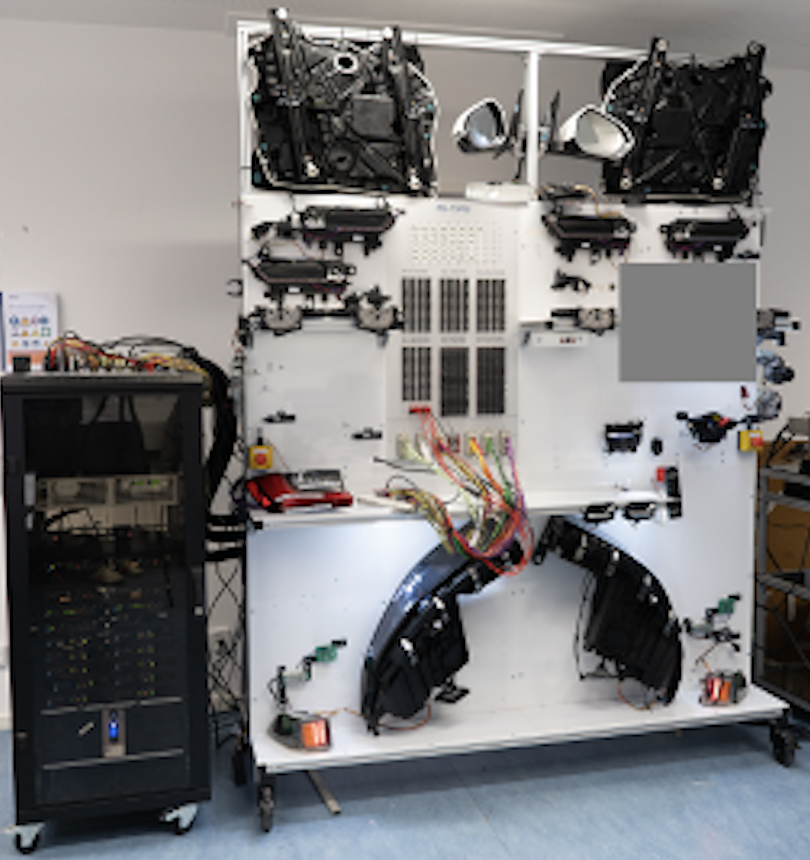
We test systems that shape comfort and brand perception. Testing is done both manually and via automated end-of-line (EOL) setups.
Validation of interior and exterior lighting across ECU and system level, including LIN/CAN-controlled ambient, headlamp, and rear lamp functions. Testing covers diagnostics, flashing, robustness, and failure scenarios under real-load and automated conditions to ensure stable integration and release readiness.
System-level validation of HVAC ECUs including actuator control, sensor feedback, and network communication. Scope covers functional behavior, diagnostics, gateway integration, automated regression runs, flashing scenarios, and stress testing under varying load conditions.
End-to-end testing of comfort functions such as window lifters, sunroof modules, and seat control units including safety mechanisms like anti-pinch protection. Includes EOL scenarios, flash robustness tests, failure injection, and automated long-run validation across software releases.

As an authorized CCC TestLab, we possess the know-how and accreditation for the following:

We ensure drivers get the connected experiences they expect.


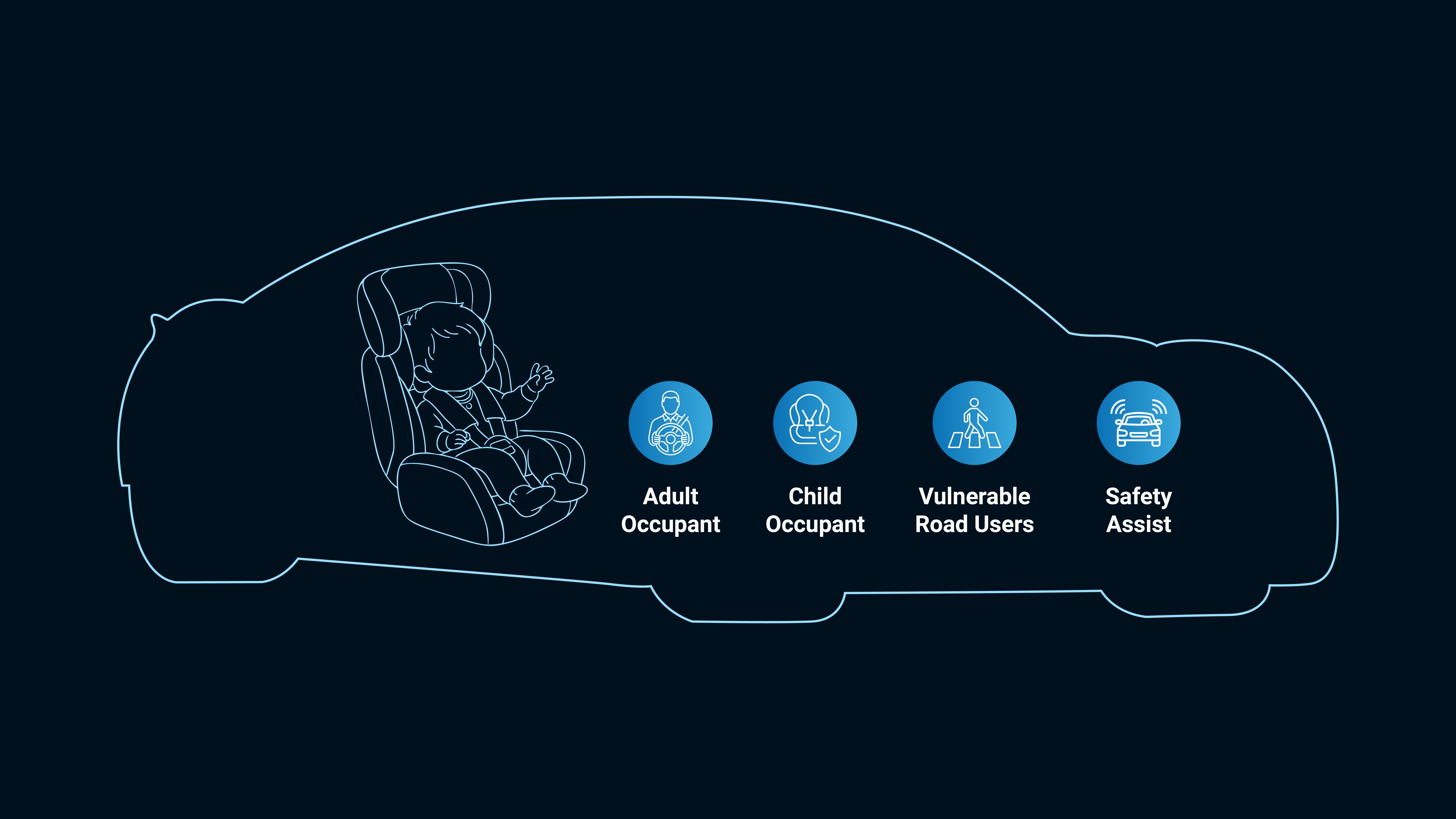
Child Presence Detection (CPD) is a safety function designed to protect vulnerable occupants, particularly children aged 0–6, from heat-related risks inside locked vehicles. To achieve Euro NCAP 5-star compliance from 2025 onwards, CPD must rely on direct sensing technologies such as in-cabin radar to detect micro-movements like breathing. The system integrates stationary interior sensors, ECU processing, and alert mechanisms to notify the vehicle owner via smartphone or warning signals. Robust validation requires extensive functional testing, real-vehicle campaigns, data collection, and machine-learning validation to minimize false positives and false negatives under real-world environmental conditions.

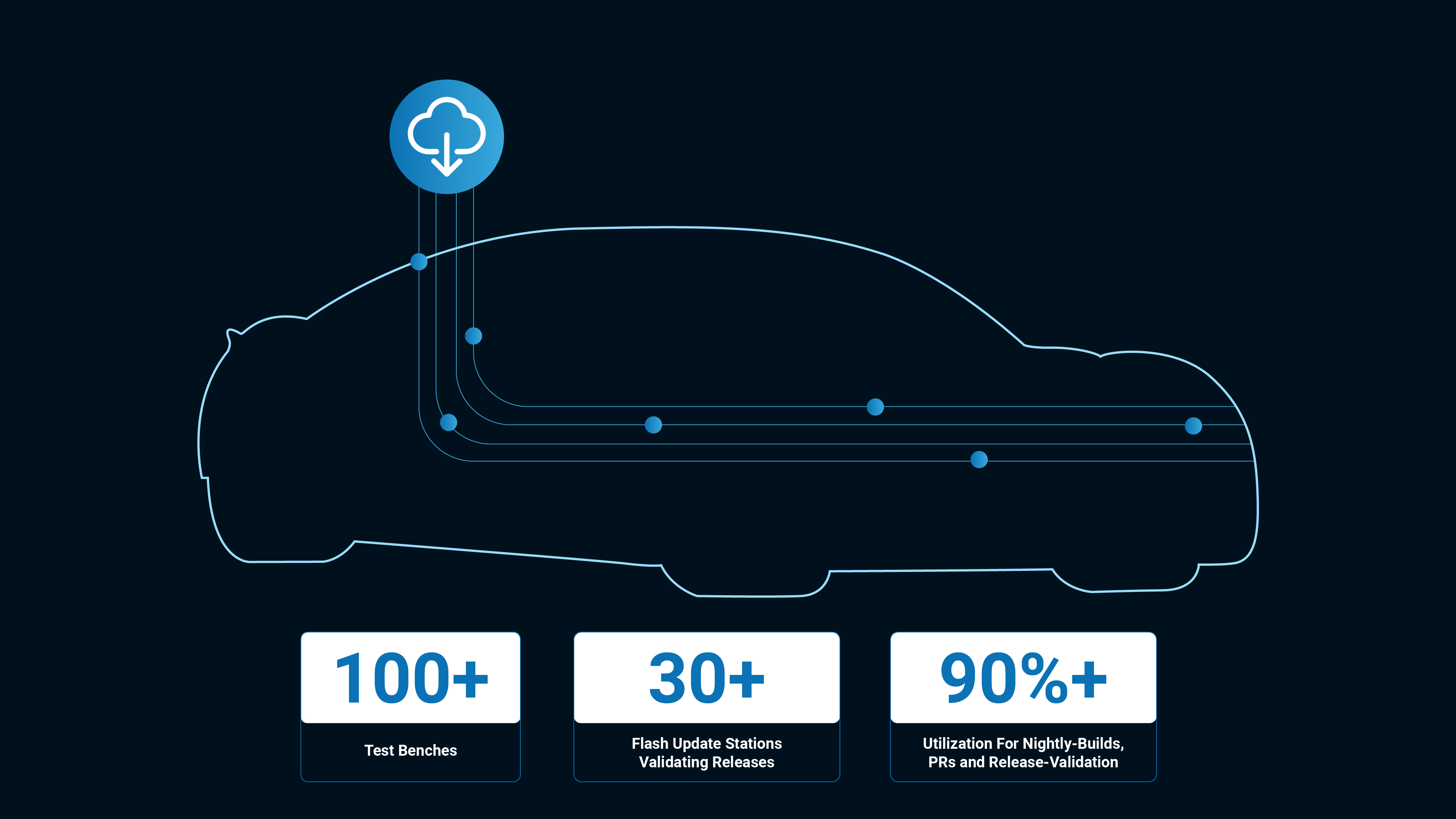
Repeated flash validation ensures the robustness of modern ECUs in software-defined vehicles. We validate ECU resilience under frequent software updates by simulating real-world stress conditions. This process prevents system degradation, guarantees stability, and supports OTA-readiness—essential for dynamic vehicle architectures and future-proof software strategies.





Let’s integrate it right!


