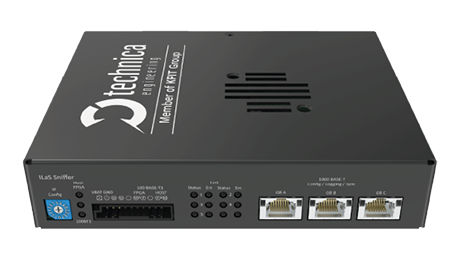
Herausforderungen, die Sie mit unseren Produkten bewältigen können

Instant startup logging with capture modules
Sofortige Startprotokollierung erforderlich
Unsere Module beginnen dank integrierter Puffer und optimierter Startlogik mit der Erfassung von Daten, sobald Ihr System hochfährt.
Nanosecond-accurate timestamping
Nanosekundengenaue Zeitstempelung
Synchronisieren Sie Daten über mehrere Bussysteme hinweg mit Hardware-Zeitstempeln bis auf Nanosekunden. Perfekt für die Ursachenanalyse und die lückenlose Rückverfolgbarkeit.
Smooth data flow for lossless logging
Reibungsloserer Datenfluss
Vermeiden Sie Datenstöße und eine Überlastung der Logger. Unsere Module gleichen den Ausgangsdatenverkehr aus und sorgen so für eine konsistente und verlustfreie Protokollierung — auch ohne externen Datenlogger.
Scalable automotive test setup
Skalierbare Testaufbauten
Kombinieren Sie mehrere Module in einem Setup. Egal, ob Sie auf einem Prüfstand oder in einem Flottenfahrzeug testen, unser skalierbares Design passt sich Ihren Bedürfnissen an.
Easy web interface configuration
Einfache Konfiguration erforderlich
Unsere Module lassen sich mühelos in Ethernet-fähige Geräte integrieren. Konfiguriere alles über eine einfache Weboberfläche — kein Lock-In.
Need for realistic network stimulation
Validate ECU behavior and test edge cases by injecting targeted traffic directly into the network. Reproduce real-world scenarios, simulate faults, and accelerate debugging without additional hardware.

Produkthighlights

Eine starke architektonische Grundlage reduziert Integrationsrisiken und beschleunigt jede nachgelagerte Phase – von der Prototypenerstellung bis zur Validierung.Unser System-Engineering-Ansatz integriert sich nahtlos in Prototyping, Toolchain-Entwicklung und HIL-Umgebungen.

Tick Mark

Hardware-Zeitstempel mit Nanosekunden Auflösung

Tick Mark

IEEE 802.1AS-2011 AVnu-Profil//PTPv2-Teilmenge

Tick Mark

Unterstützung von Testtechnik und Kontrollmanagement

Tick Mark

Webbasierte Konfigurationsoberfläche

Filterung und Verkehrsinjektion

Kaskadierung für skalierbare Setups

Betriebstemperatur: -40 °C bis 75 °C oder höher

Leistung: 6,5V—24V DC oder noch mehr

Erfassung des AVB/TSN-Datenverkehrs

Für jede Testsituation konzipiert

ECU bench testing
Steuergeräte-Prüfstand
Test drive logging
Protokollierung der Testfahrt
HIL systems
HIL-Systeme
Fleet car validation
Validierung von Flottenfahrzeugen
Multi-bus synchronization
Multibus-Synchronisierung
Erfassung des AVB/TSN-Datenverkehrs

Unsere Lösungen

Success stories from our partners

BMW
BMW

"Technica's Capture Module SerDes enabled lossless, synchronized, multi- camera data capture – accelerating ADAS validation and improving operational agility."

FELIX RAULEIN
BMW
BMW

"Technica's Capture Modules powered our production line and fleet data collection – backed by proactive on-site support – helping us deploy reliable test systems fast and hit critical milestones."

XU DONG
BMW
Spotlight

"Fast, reliable multi-bus testing. Technica Engineering's Capture Modules integrated seamlessly, triggered cost savings via direct collaboration, and delivered stable, maintenance-free logging – no signal or message loss observed."
MR. WU
Read more

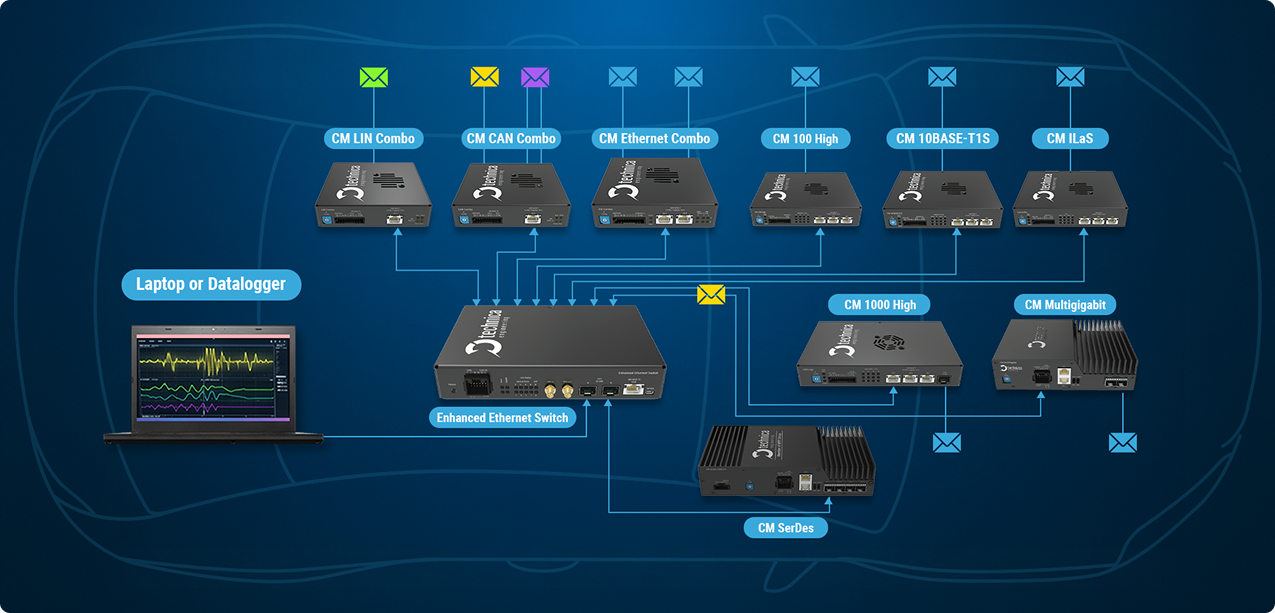
Anwendungsbeispiel

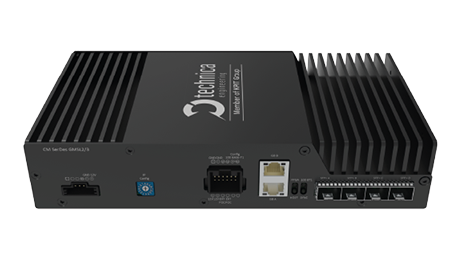
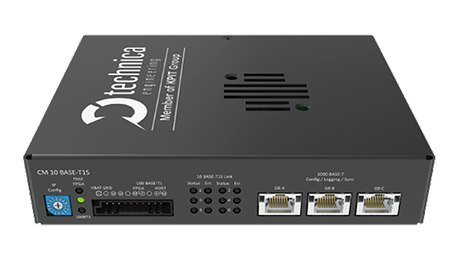
Technica’s Capture Modules can tap the entire in-vehicle network traffic across multiple buses and bring a time synchronized data to your PC or a Datalogger.
Technica capture modules in-vehicle network setup

Webinars

Resources

Case Study

Scaling ADAS validation globally without losing a single frame

Download
Case Study

Enabling modern protocols on a legacy HIL with zero disruption

Download
Playbook

Capture all IVN traffic from bench to fleet

Download

Frequently asked questions

What are the limits regarding frame loss? Under which conditions could frames be dropped, and how does the system prevent that?

Capture Modules use an internal buffer to store incoming frames. Frames may be lost only if the data logger startup is delayed long enough to fill the internal buffer, or if the logging system cannot keep up with the required logging speed. In normal operation, the logging bandwidth is higher than the maximum input bandwidth, so no frames should be lost.

How fast can the Capture Modules start logging after power-up?

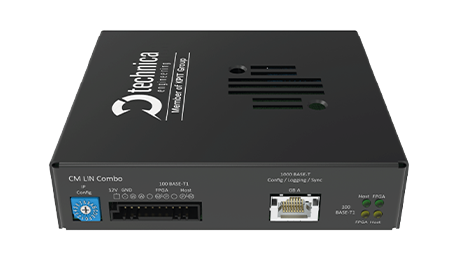
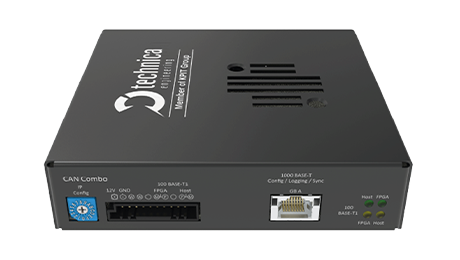
CM CAN and CM LIN can log frames approximately 100 ms after power-up. CM 1000High Evo requires approximately 250 ms until the network link is established.

What is the power consumption in production, and is there a sleep mode?

Power consumption depends on active ports, SFP modules, and operating temperature.CM 1000 High Evo can consume up to 20 W in the worst-case configuration. All Capture Modules support sleep mode, with current consumption typically below 500µA.

How specific is the advanced filtering? Can I filter by interface, IDs, or protocol-specific parameters?

Advanced filtering can match the incoming interface and the content of the captured frame. CM 1000 High Evo can inspect the first 78 bytes of an Ethernet frame, enabling filtering on protocol headers, identifiers, MAC addresses, IP addresses, and UDP/TCP port numbers.

Is it possible to configure the modules without using the web UI, for example via an API for automated test setups?

Yes. The devices provide a remote API to configure and monitor the modules withoutusing the web UI. The API exposes all parameters and status information available through the web interface.

How are transmitted frames synchronized with ongoing traffic, and can this be used for closed-loop testing?

CAN and LIN Capture Modules support time-aware frame injection. The application sends the frame data and timestamp, and the Capture Module transmits the frame whenthe internal timestamp counter reaches the specified value.

Does the Capture Module operate transparently on the bus, and does it introduce any measurable latency or delay?

For CAN and LIN, the Capture Module operates passively. For Ethernet, it is inserted between two communicating devices. CM 1000 High Evo has constant latency of approximately 6 µs, which is fixed, predictable, and can be compensated by PTP.

If data loss or link issues occur, what debugging capabilities are available to identify the root cause?

TECMP and ASAM CMP provide built-in diagnostic and monitoring capabilities.Capture Modules can transmit status messages and generate event notifications such as link up/down events and loss of time synchronization.

Nehmen Sie Kontakt mit uns auf!

Suchen Sie Unterstützung?

Kundensupport
Contact general

Benötigen Sie weitere Informationen zu unseren Produkten?

Vertrieb kontaktieren